Author: Elisa dell’Apa
Brunello Cucinelli is a fashion maison which produces ready-to-wear apparel, footwear and accessories for men, women and children, positioned in the market segment of absolute luxury. Boasting a consolidated role as ambassador of Italian luxury throughout the world, the company is well-known especially for its extremely refined cashmere knitwear.
As of December 31st, 2023, Brunello Cucinelli Group is made of 28 companies. The holding Brunello Cucinelli S.p.A. has been listed on the Milan Stock Exchange – in 2023 it was included in FTSE MIB – and the London Stock Exchange since 2012.
2023 has been definitely a great year for the group, which has collected 1,139.4 millions of euros (exceeding a billion in revenues for the first time ever), with a growth of +23.9% compared to 2022; EBIT has raised to 187.4 millions of euros, increasing by 39.4%; EAT increased by 42.0%, reaching the value of 123.8 millions of euros.
The company operates in Europe (where it gains 38% of its revenues, with an increase of 17.0% compared to 2022), America (35% of revenues, increased by 21.0% compared to 2022) and Asia (27% of revenues, increased by 40.0% compared to 2022).
Products are placed on the market through the direct single-brand distribution channel, both retail and wholesale, which collectively gathers 139 boutiques, of which 46 in Europe, 35 in America and 58 in Asia. In 2023, three new openings have been inaugurated: Rome and Hong Kong’s boutiques, and Dubai’s flagship store.
Company’s workforce corresponds to 2.623 FTE (full time equivalent).
The corporate governance model is shaped as the so-called traditional model and it’s made of shareholders council, board of directors, board of auditors, legal accounts auditor. Brunello Cucinelli himself takes on the roles of President, Executive Director and Creative Director.
Brunello Cucinelli’s company is characterized by a strong philanthropic vocation: Humanistic Capitalism and Human Sustainability, the two pillars of brand’s philosophy, permeate each and every step of the value-chain and constitute a key source of competitive advantage.
The Humanistic Capitalism philosophy is structured around a key principle: profit must be earned in an ethical way, never at the expense of the people nor the planet. Not only the company values its workers by offering them above average compensations and numerous benefits, but it also makes a point of creating a welcoming familiar environment, where every single person has a precise scope to fulfill, being a fundamental note of the grand harmony.

This philosophy is not only directed towards the people who work for the company, but it is reflected also on the relationship with the stakeholders, including the communities the company gets in contact with.
In fact, the relationship with the community is where it’s possible to spot the second fundamental pillar of Brunello Cucinelli’s approach, the Human Sustainability, a broad concept of sustainability that comprehends six dimensions: environmental, economical, technological, cultural, spiritual and moral. These last two are the most peculiar: they refer to the importance of a fair profit distribution among all those who contribute to it.
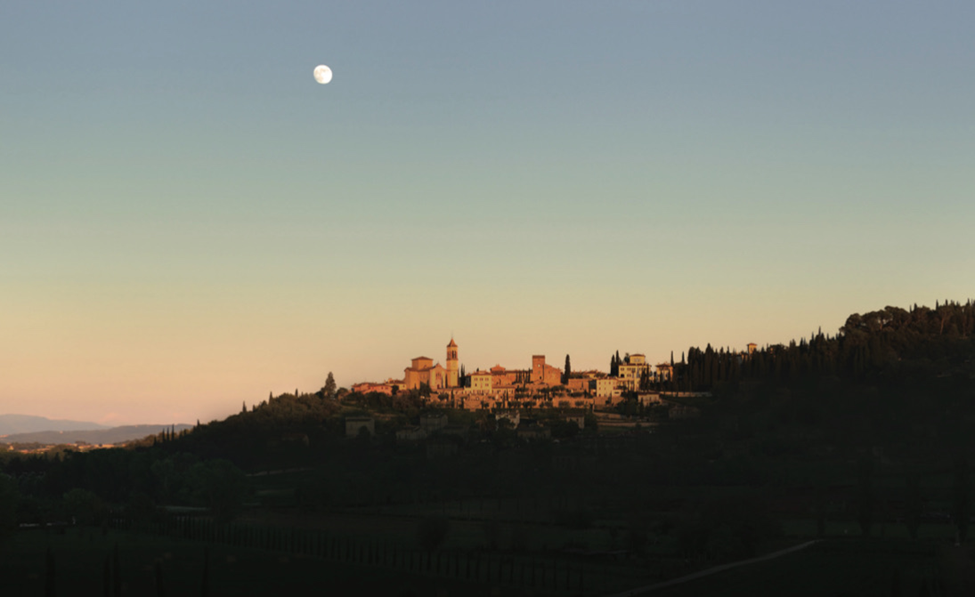
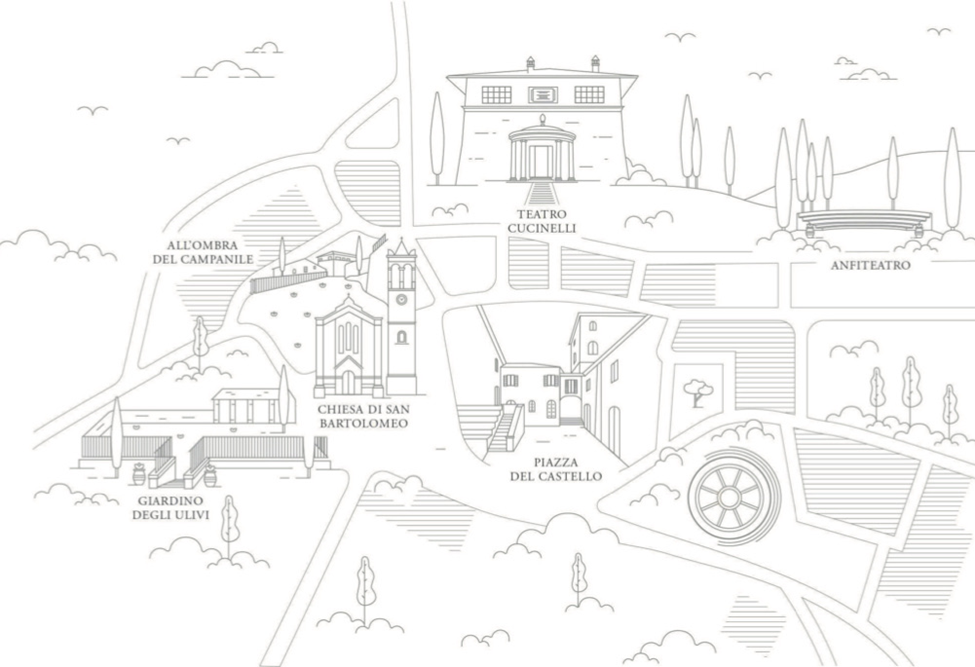
The cultural dimension is another very interesting one, easily traceable in the strong bond between the company and the small town of Solomeo in the region of Umbria. Brunello Cucinelli discovered Solomeo as a very young boy: it was his then girlfriend’s – and now wife – town of birth, which was slowly getting emptier and emptier as the younger generations moved to bigger cities looking for better opportunities. Brunello fell in love with the ancient allure of Solomeo and decided to buy and renovate many historical buildings, such as the castle, and to build new ones, donating the town a new life by creating the wonderful Forum of Arts, a magnificent place to foster beauty and exchange culture.
Brunello Cucinelli’s effort towards a sustainable business model becomes extremely clear while looking at the value chain. Starting from the creative conception to the after-sale customer care, each process is vertically integrated and directly managed by the company itself. Materials are acquired from a network of 255 suppliers, 96.9% of which being Italian (2.4% are European; the remaining 0.7% come from Japan and are responsible of the denim supply). The production chain is extremely short and exclusively located in Italy: all the processes are appointed to small artisanal companies, 75% of which residing in Umbria. The whole production is characterized by repeated and rigorous quality controls to minimize the waste.

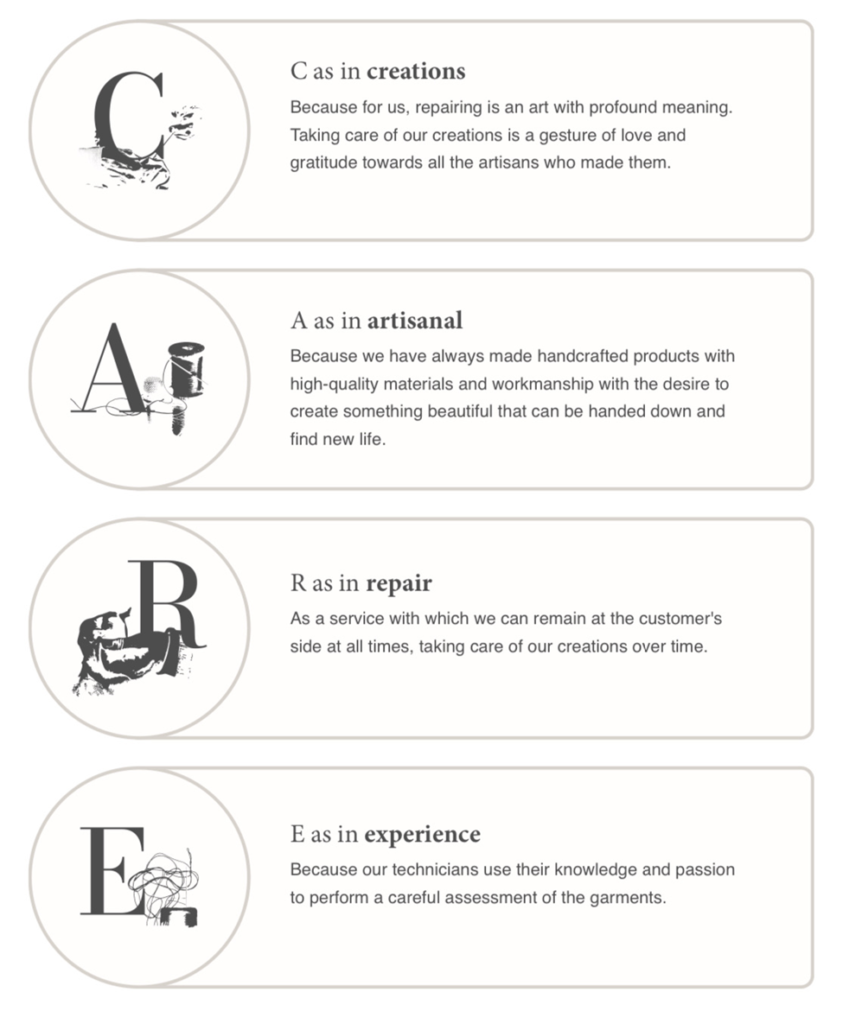
Moreover, the company offers maintenance for its own garments with no time limits: the mission of the brand is to produce high quality items to pass down through generations, which is not only a signal of sustainability, but ultimately the true essence of luxury.
In a dramatic historical moment, which is imposing a radical and immediate metamorphosis of the economic structure of businesses (notably, the fashion industry is the second most polluting one), Brunello Cucinelli represents a virtuous example of how the deep commitmen to sustainability, combined with a strong ethic, can lead to very impressive results.