
Author: Camilla Friso
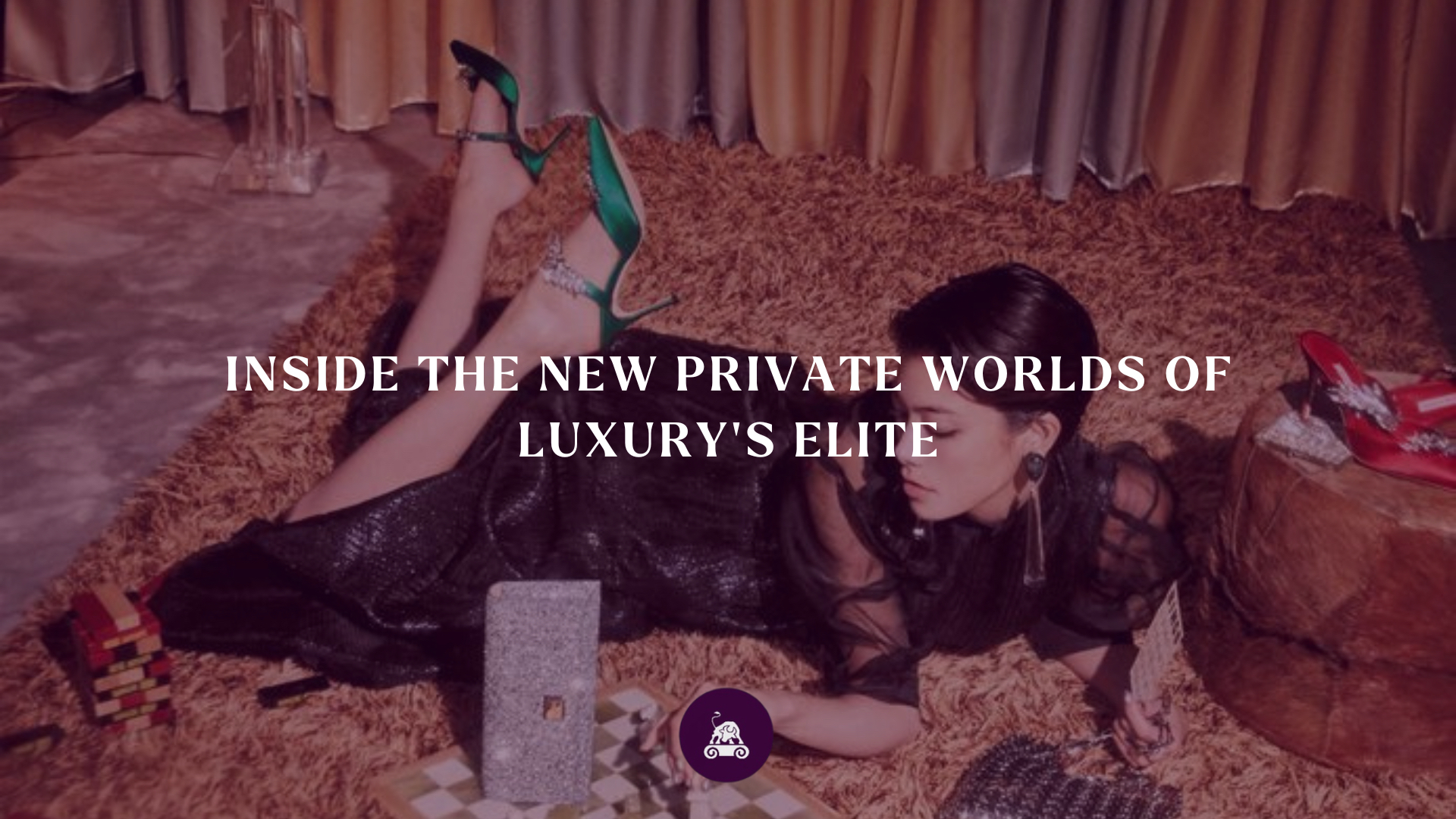
In a discreet salon above Los Angeles’ Rodeo Drive, a Gucci client sips champagne while examining a custom crocodile leather jacket, priced at over $50,000. The setting is hushed, almost sacred, with no other shoppers in sight: only a dedicated stylist, a personal client liaison and the comforting knowledge that in this room access is the rarest currency. This is not retail as the world has long known it; this is retail reimagined for the one percent.
Across the luxury industry, a tectonic shift is underway. As aspirational shoppers grow more cautious in an unpredictable economy, the richest consumers (those who have seen their wealth grow despite market turbulence) are assuming center stage. According to Business of Fashion’s 2024 report, the top two percent of luxury shoppers now account for approximately 40 percent of global luxury sales. These consumers are less price-sensitive and more experience-driven, forcing brands to abandon broad-based strategies in favor of extreme personalization, intimacy and rarity.
Gucci, under the creative leadership of Sabato De Sarno and the strategic direction of Marco Bizzarri’s legacy, has embraced this new reality with vigor. Its “Gucci Salons,” launched in Los Angeles and later expanded to Tokyo and London, represent the epitome of private luxury. Access is strictly by invitation, and the products available are often unseen elsewhere: special collections, unique collaborations and bespoke pieces that transcend typical retail offerings. The design of the salons themselves, blending mid-century modern elements with maximalist Italian flair, reinforces the sense that each visit is not a transaction but an induction into a private world.
The push toward exclusivity is not confined to physical stores. Mytheresa, the German luxury e-commerce pioneer, has transformed digital shopping for high-net-worth individuals. The platform’s Private Client program offers services such as personalized fashion curations, private jet deliveries, backstage access to major fashion weeks and exclusive dinners with designers like Valentino Garavani and Brunello Cucinelli. Mytheresa’s focus is razor-sharp: nearly 30 percent of its sales stem from just three percent of its clientele. In the fiscal year ending June 2024, Mytheresa posted €841 million in sales, achieving 10 percent year-over-year growth, even as broader online luxury sales faltered.
Tiffany & Co., the venerable American jeweler now under LVMH’s vast umbrella, is similarly redefining its relationship with the ultra-wealthy. The reopening of its Fifth Avenue Landmark store unveiled a new model: high-jewelry salons reserved for select clients, who are offered not just jewelry, but the opportunity to collaborate directly with master artisans. In 2023, Tiffany’s Blue Book collection, featuring one-of-a-kind pieces centered on rare gemstones like Kashmir sapphires and Argyle pink diamonds, achieved record pre-sales before even being exhibited publicly. Personalization has become the golden thread connecting Tiffany to its new generation of billionaire clients, many of whom are millennials and Gen Z.
Elsewhere in the industry, the pattern repeats. Louis Vuitton’s “Haute Maroquinerie” program invites top customers to design their own versions of the brand’s most iconic bags, selecting everything from the leather to the stitching color. Hermès, whose Birkins and Kellys are famously unobtainable without social capital, has elevated its personalization services for equestrian goods, offering bespoke saddles crafted by a single artisan over six months. Even Cartier, long associated with heirloom jewelry, is moving deeper into the world of special commissions, where clients can participate in the design process from sketch to final polish.
The motivation behind this shift is clear. According to Bain & Company’s Luxury Goods Worldwide Market Study (Spring 2024), the personal luxury goods market grew by a modest 4 percent overall. Yet spending among ultra-high-net-worth individuals, those with investable assets over $30 million, rose by a staggering 11 percent. At a time when middle-class consumers are more cautious brands see the ultra-wealthy not just as clients, but as the industry’s true growth engine.
However, courting this clientele demands more than just higher price tags. It requires storytelling, emotional connection and above all, experiences that cannot be replicated or commoditized. As Claudia D’Arpizio, lead author of the Bain report, notes, “Luxury brands must think like hosts at a private club: offering intimacy, community and experiences money alone cannot guarantee.”
There is, however, a risk. The growing exclusivity of luxury brands could alienate broader consumer bases, particularly younger generations who value inclusivity, authenticity and social impact alongside craftsmanship and heritage. The challenge for brands will be maintaining a delicate balance: delivering the dream of belonging for the few without disenchanting the many.
Yet for now, the velvet rope remains firmly in place. In a world increasingly saturated with mass luxury where nearly anyone can purchase a logo if they have the means, the ultimate distinction is not ownership, but access. To shop at Gucci’s Salon, to commission a one-of-a-kind Tiffany necklace, to design a unique Louis Vuitton trunk… these are experiences that money alone does not buy. They require connections, loyalty and an invitation into an inner sanctum where luxury is once again a private affair.
Gucci, Mytheresa, Tiffany & Co., Louis Vuitton, Hermès and Cartier are writing a new chapter in the history of luxury. One where the journey is no longer about acquiring more things but about gaining rare experiences, entering exclusive worlds and affirming a status that remains tantalizingly out of reach for almost everyone else.
In the evolving narrative of luxury, belonging has become the most precious commodity of all.