
Author: Aurora Vinti
Āman resorts is a Swiss company owned by Vladislav Doronin that in 2022 was valued at $3 billion. As of March 2025 the company owns 35 properties across 20 different countries and spanning through 5 continents. In the same year the company made headlines for obtained a $360 Million investment from UAE investors, thus questions were raised as to why investors trust this company so much and what is the so successful strategy.
The company is part of the Aman group Sarl, a multinational hospitality company but was funded in 1988 by Adrian Zecha and the first location was a holiday home in Phuket. The idea soon became a small boutique resort in which the owner and some friends invested their own money as no bank would lend them funds due to the small scale of the resort. Regardless of the general distrust, the Amanpuri resort in Phuket reported five times higher rates than local competitors and in 1992 the group expanded in Indonesia with several other locations in Bora Bora and Courchevel.
Later, Clement Vaturi acquired the majority of the stakes and in 1998 his share was acquired by a Los Angeles-based real estate investment fund, Colony Capital which came into conflict with Vaturi. In the same period, Zecha resigned to pursue other interests. In 2000 Colony Capital and Vaturi settled their lawsuit and the latter sold its share to a Hong Kong investment company, Lee Hing Development. This ownership change allowed Zecha to return as chairman and CEO with full control over the company. The following years were engaged in launching several locations in Cambodia, India, Buthan, Sri Lanka and the Caribbean. In 2007, DLF, India’s largest real estate company, acquired Lee Hing’s shares for $400 million and sold them back in 2014 to Āman Resorts Group, an investment company owned by Doronin. In that same year, Zecha stepped down for good and subsequently the corporate headquarters were first moved to London and then to Switzerland. In 2015 Doronin became the sole owner of Aman following a company restructuring and assumed the position of CEO.
Since then, Doronin promoted a diversification strategy by creating Janu, a more affordable hospitality brand, which operates mainly in Japan, Montenegro, and Saudi Arabia; as well as launching a clothing line, further advancing the idea of a lifestyle brand.
The brand took three decades to build into what it is today embodying a unique philosophy and acquiring an unmatched reputation in the luxury hospitality market.
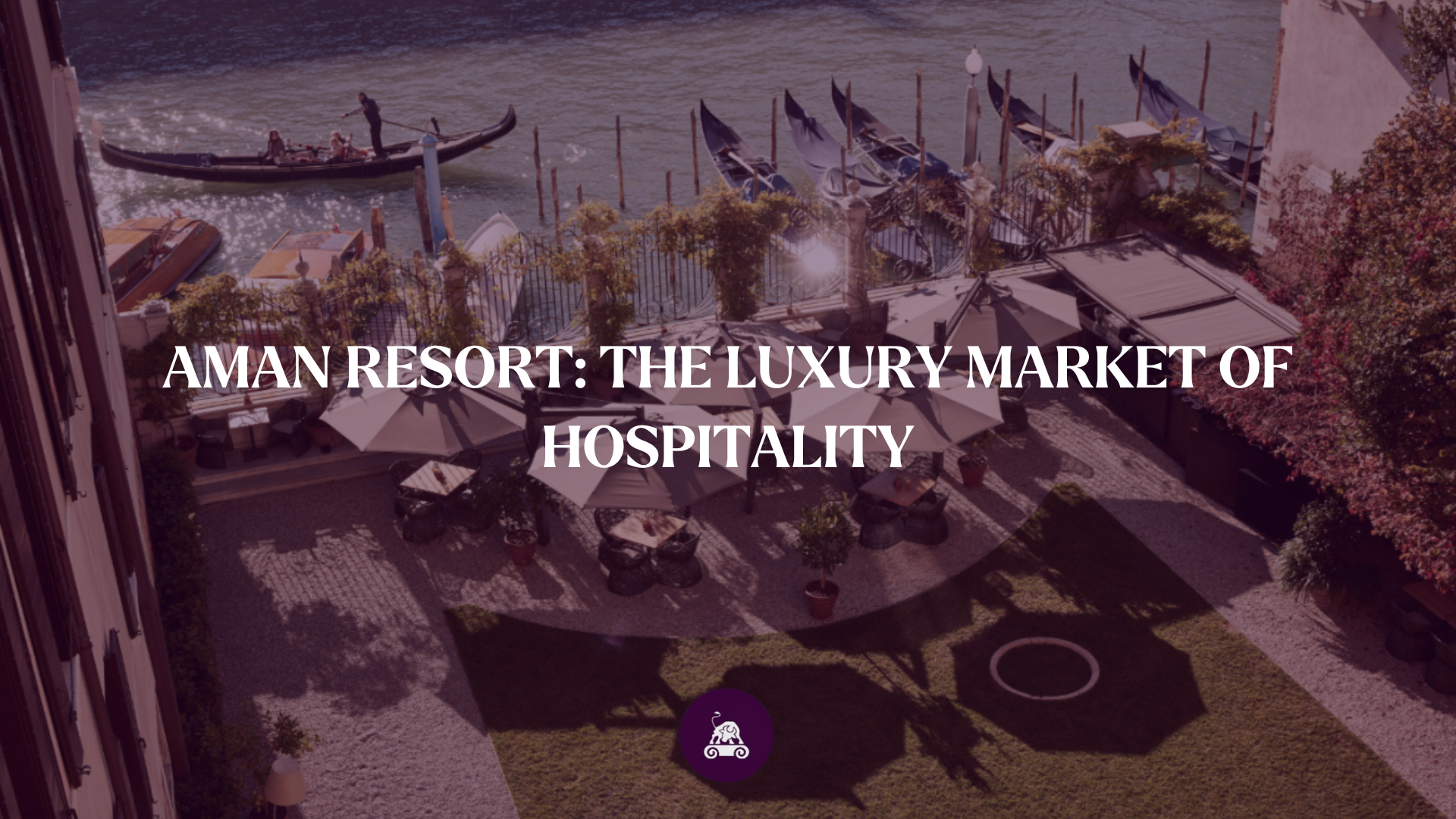
Āman is considered the most luxurious hotel in the world with a level of exclusivity no competitor can match. Its key to success was building an empire on mystique with breathtaking locations and flawless service. the concept is based on small ultra-private retreats that blend seamlessly into the surroundings creating a sanctuary of peace for its guests.
Āman Resorts has thus become the standard for quiet luxury hospitality offering up to 35 properties, 8 of which were designed by the Belgian architect Jean-Michel Gathy of Dennison, known for being the designer of many ultra-luxury hotel groups worldwide such as Four Seasons, Cheval Blanc and St Regis. The designs are particularly thought to disappear into the environment and not be tacky. Some locations are even set inside a UNESCO site like the Aman at Summer Palace in Beijing, which allows for full immersion in history, culture and nature.
The properties offer top-level services, spas, bars, pools, tennis courts and more to enhance the experience and immerse the guest in a state of relaxation. Some of the destinations are so secluded one might not see other guests for all their stay, thus offering intimacy and an almost personal residence feel.
Āman built its empire on privacy as the staff is strictly prohibited from discussing guests thus it is where people go when they don’t want to be seen. They follow an anti-hotel model rejecting grandeur and competing with tranquility and space.
Another strength of the brand is the minimalism and quietness, they don’t offer influencer sponsorship, nor do they participate in loud marketing campaigns.
Their exclusivity is remarked by the unique experiences the resorts offer, spanning from early temple access to incredible sports activities typical of each location. This is mainly enhanced in non-urban locations that provide villas, pavilions or tents with private lounging and dining and outdoor space.
One of the most expensive and undoubtedly one of the most remarkable locations is the Crown Building in Manhattan. Part of the building was converted into a hotel in 2022. There are 83 suites decorated with minimalist colours and gold-plated decorations and contemporary furniture. Alongside the launch of Aman New York, the brand has created a dedicated Aman Club membership for urban destinations that affords Founding Members priority access to the properties.
Throughout the year, Āman has extended its business, they have a yacht, the Amandira, which sails through the waters of Eastern Indonesia and models after traditional Indonesian sailing vessel, and in 2023, launched Aman Interiors that offers bespoke furniture designs, limited edition architect collaborations and interior services in collaboration with Kengo Kuma.
However the brand is not just looks, Doronin has focused on financial stability since acquiring the business in 2014, and in the last 10 years, the resorts have recorded unparalleled average daily rate growth. The vision and mission of the group have proved successful on all fronts, and, unlike its competitors, the brand has not experienced a decline following its scaling up. Its success is driven by its boutique proposition and dedication to its guests through personal touches that elevate the guests’ stays.