
Author: Martina Lelli
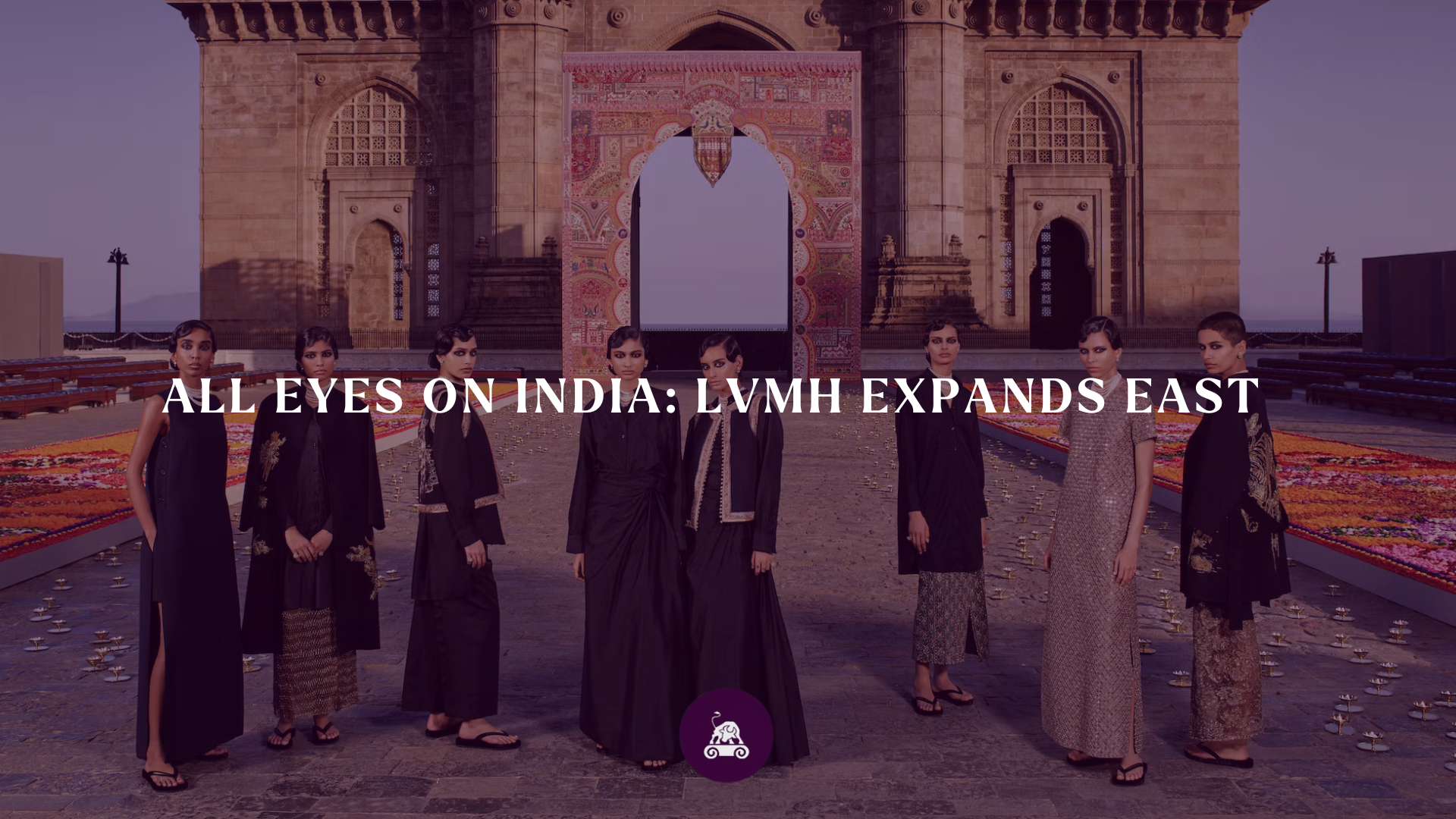
In 2025, LVMH is making it clear: India is no longer just an emerging market — it’s a strategic priority. Luxury brands under the LVMH umbrella are accelerating their expansion across India, tapping into a fast-growing consumer base that blends deep cultural heritage with rising economic power. Louis Vuitton recently opened a flagship store in Mumbai’s Jio World Plaza, following the success of its locations in Delhi and Bangalore. Meanwhile, Dior staged a historic pre-fall 2023 show at the Gateway of India — a celebration of Indian craftsmanship and its long-standingpartnership with Mumbai’s Chanakya ateliers. Jewelry brand Bulgari is also increasing its presence, adapting its collections for the Indian market with culturally meaningful pieces like the Mangalsutra necklace, and naming Priyanka Chopra Jonas as a global ambassador. At the same time, Sephora India — now fully owned by LVMH — is undergoing a rebranding and expansion push to capture the country’s growing beauty market.
This surge in activity isn’t random. India’s luxury market is expected to triple by 2030, fueled by a booming ultra-high-net-worth population, increased digital access, and a style-conscious Gen Z. But what makes India unique is its demand for meaning — where heritage, craft, and story matter as much as the logo.
LVMH’s approach signals a broader shift: luxury is becoming more global, more culturally responsive, and more locally embedded. India isn’t just a consumer — it’s becoming a collaborator in shaping what luxury means today.
As luxury looks eastward, the question isn’t whether India will become a luxury capital — but how soon.
LVMH has publicly acknowledged India as a key market for its expansion plans. In a 2024 interview, Tikka Shatrujit Singh, LVMH’s chief representative for Asia and advisor to Louis Vuitton, described India as being in “phase one” of its luxury market development, focusing on the very affluent segment. He emphasized the unique preferences of Indian consumers, noting their desire for bespoke and specially made products, which aligns with India’s rich tradition of craftsmanship.
Furthermore, LVMH’s private equity arm, L Catterton, announced a joint venture in India with former Hindustan Unilever CEO Sanjiv Mehta in 2024. This partnership aims to tap into India’s growing consumer market, highlighting the country’s high GDP growth and large population as key factors for this strategic move.
These developments underscore LVMH’s commitment to the Indian market and its recognition of India’s potential as a significant player in the global luxury industry.
India is no longer a “future” market — it’s a now market. LVMH’s strategy shows that luxury is evolving: culturally adaptive, globally inclusive, and no longer strictly Eurocentric.