
Author: Camilla Friso
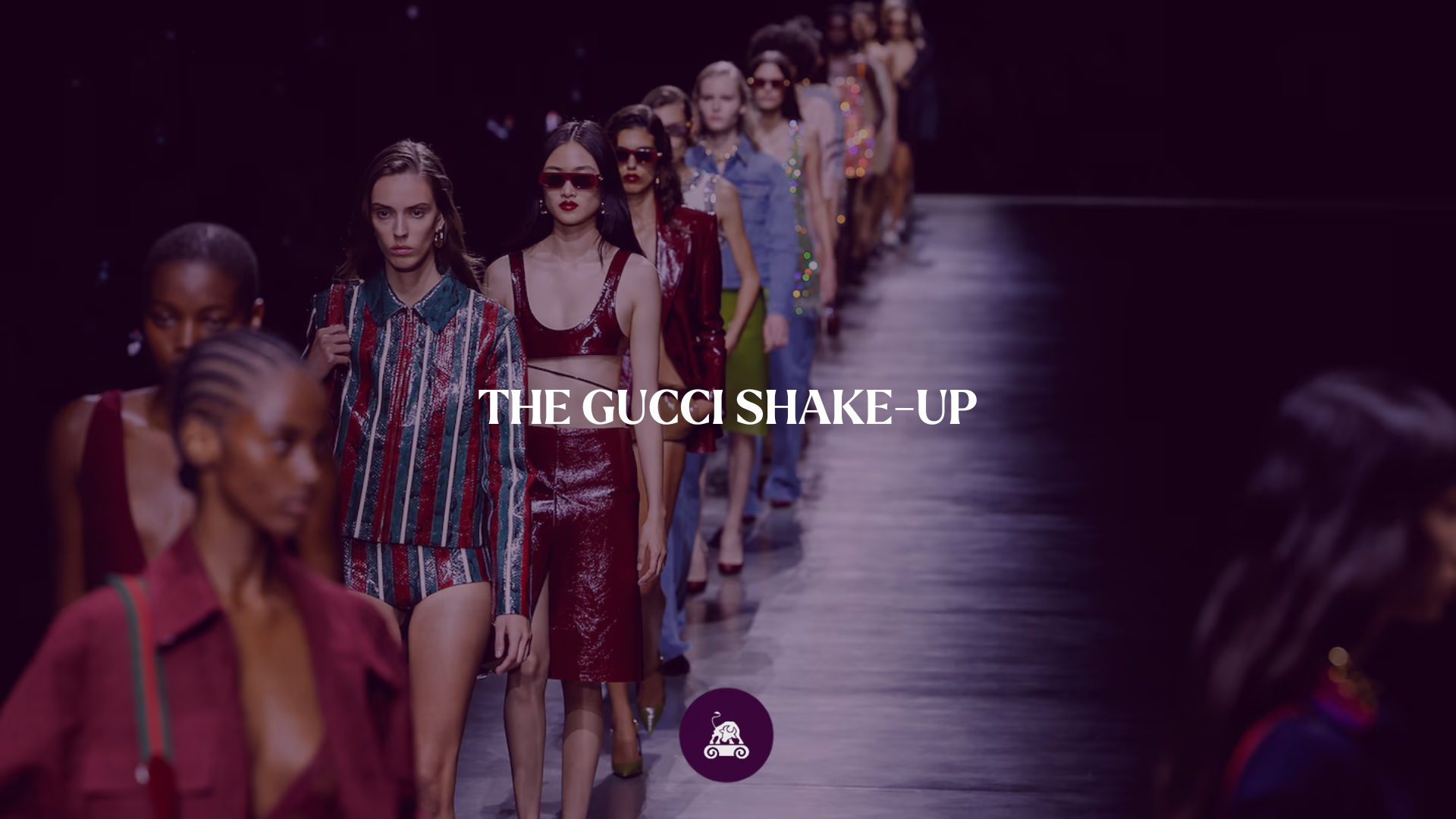
Gucci has long been one of the most iconic fashion houses, evolving through different creative eras that have defined entire generations. From Tom Ford’s sultry minimalism to Alessandro Michele’s maximalist eccentricity, the brand has continuously reinvented itself. Now, with Demna Gvasalia at the helm, the question on everyone’s mind is: will Gucci’s new direction reassert its authority in the fashion industry, or is Kering making a high-stakes gamble that could backfire?
Recent market reactions suggest uncertainty. Following the announcement of Demna as Gucci’s new creative director, Kering’s stock plunged by over 12%, a signal that investors may not be fully convinced about this transition. But why? Is Demna the right fit for Gucci, or does this move risk alienating its existing customer base while failing to capture a new one?
The Vision: authority, relevance and risk
According to Francesca Bellettini of Kering, the goal is clear: to reinforce Gucci’s fashion authority and elevate the brand even further. However, we cannot deny that the strategy is inherently risky. Unlike Michele, who successfully crafted a deeply emotional and narrative-driven brand identity, Demna is known for his disruptive, often controversial approach to fashion. His tenure at Balenciaga redefined luxury by blending high fashion with streetwear, irony and socio-political commentary. While this approach resonated with Gen Z and streetwear enthusiasts, does it align with Gucci’s heritage and clientele?
The concern is that Demna’s signature aesthetic: deconstruction, oversized silhouettes and a subversive take on luxury that could feel at odds with Gucci’s traditional DNA. If he simply transplants the Balenciaga or Vetements look onto Gucci, it risks becoming redundant rather than revolutionary. As Business of Fashion’s Imran Amed pointed out, “If Demna simply takes his Vetements and Balenciaga look and implements that at Gucci, it will not work.” Gucci’s identity has always been a dynamic blend of elegance, craftsmanship and bold statements. To maintain its stature the brand must evolve while staying true to its core values. The challenge for Demna is to find a balance between his forward-thinking vision and Gucci’s rich history. Otherwise, the brand risks veering too far into an aesthetic that feels out of place or forced.
The financial fallout: investor scepticism
Numbers don’t lie… and the stock market’s reaction was a clear indicator of unease. A 12-13% drop in Kering’s stock following the announcement shows that investors are not entirely confident in the move. This scepticism may stem from multiple factors:
- Uncertainty in Demna’s Adaptability: While undeniably talented, can Demna shift his creative language to fit Gucci’s narrative, rather than imposing his existing formula?
- The Brand’s Struggling Performance: Gucci has faced declining sales in recent years, and investors may fear that an avant-garde reinvention could alienate its core luxury clientele.
- The Impact of Controversy: Demna’s recent controversies at Balenciaga, including the brand’s ad scandal, have left a lingering reputational risk that could affect Gucci’s image.
Kering has bet big on creative directors before, but the financial world often has a more cautious
approach than the fashion industry. Investors are looking for signs that Demna’s appointment will bring tangible results, either through increased sales, brand desirability or a resurgence in Gucci’s
influence. Until those results materialize, the scepticism will remain.
The industry’s verdict: mixed reactions
Social media and industry polls indicate a lack of consensus on whether Demna is the right choice. A BoF Instagram poll showed that only 10% of respondents believed Demna would successfully restore Gucci’s authority, while 64% said no and 27% were unsure. These numbers reflect widespread scepticism from fashion insiders and consumers alike.
However, it’s worth noting that Gucci has historically thrived on reinvention. Every era of Gucci has been marked by bold creative shifts: in an industry where stagnation means irrelevance a shake- up might be exactly what the brand needs.
Fashion critics and insiders have also pointed out that Demna’s strength lies in his ability to create cultural moments. At Balenciaga, he transformed everyday objects into luxury items and turned unconventional marketing into global headlines. If he can bring this level of cultural impact to Gucci without compromising the brand’s essence, the appointment could prove to be a stroke of genius.
Can Demna evolve?
The key to success will be whether Demna can evolve beyond his existing playbook. If he approaches Gucci with fresh eyes, balancing its heritage with innovation rather than defaulting to Balenciaga-esque aesthetics, there is potential for something groundbreaking. The challenge will be to merge Gucci’s rich Italian craftsmanship with Demna’s conceptual approach in a way that feels authentic rather than forced.
Additionally, Gucci’s recent struggles with relevance among younger consumers could work in Demna’s favour. His ability to tap into youth culture, meme-worthy fashion moments and a radical approach to branding could reinvigorate Gucci in a way that traditional luxury storytelling cannot. But reinvention isn’t just about aesthetics. Gucci needs to maintain its desirability at all levels, from ultra-luxury clients seeking timeless pieces to younger consumers looking for accessible statement items. The balance between exclusivity and mass appeal is a delicate one, and Demna must navigate it carefully.
The path forward: no room for half-measures
For this strategy to work, Gucci and Kering must commit fully to the vision. Hesitation or a diluted execution could result in an identity crisis, where neither traditional customers nor new ones are satisfied. The brand must also carefully manage its existing clientele, ensuring that loyal consumers don’t feel alienated by a drastic shift.
Gucci’s brand legacy is built on risk-taking, but risks must be calculated. If Demna successfully redefines Gucci without losing sight of its core identity, this transition could position the brand as an industry leader once again. However, if the shift feels forced or disconnected it could damage Gucci’s credibility and market positioning.
Ultimately, whether Gucci’s Demna strategy will succeed depends on execution. If Demna evolves his creative identity to craft a Gucci that is bold yet deeply rooted in its legacy, this could be a defining moment in fashion. But if the brand loses sight of its essence to chase hype, it risks becoming a cautionary tale of reinvention gone wrong.
One thing is for certain: this will be one of the most watched creative transitions in fashion history. Will Demna redefine Gucci for a new era, or will this move be remembered as one of Kering’s most controversial decisions? Time will tell, but fashion’s eyes are firmly on Gucci’s next chapter.